Why I Created a Jewish Food Calendar
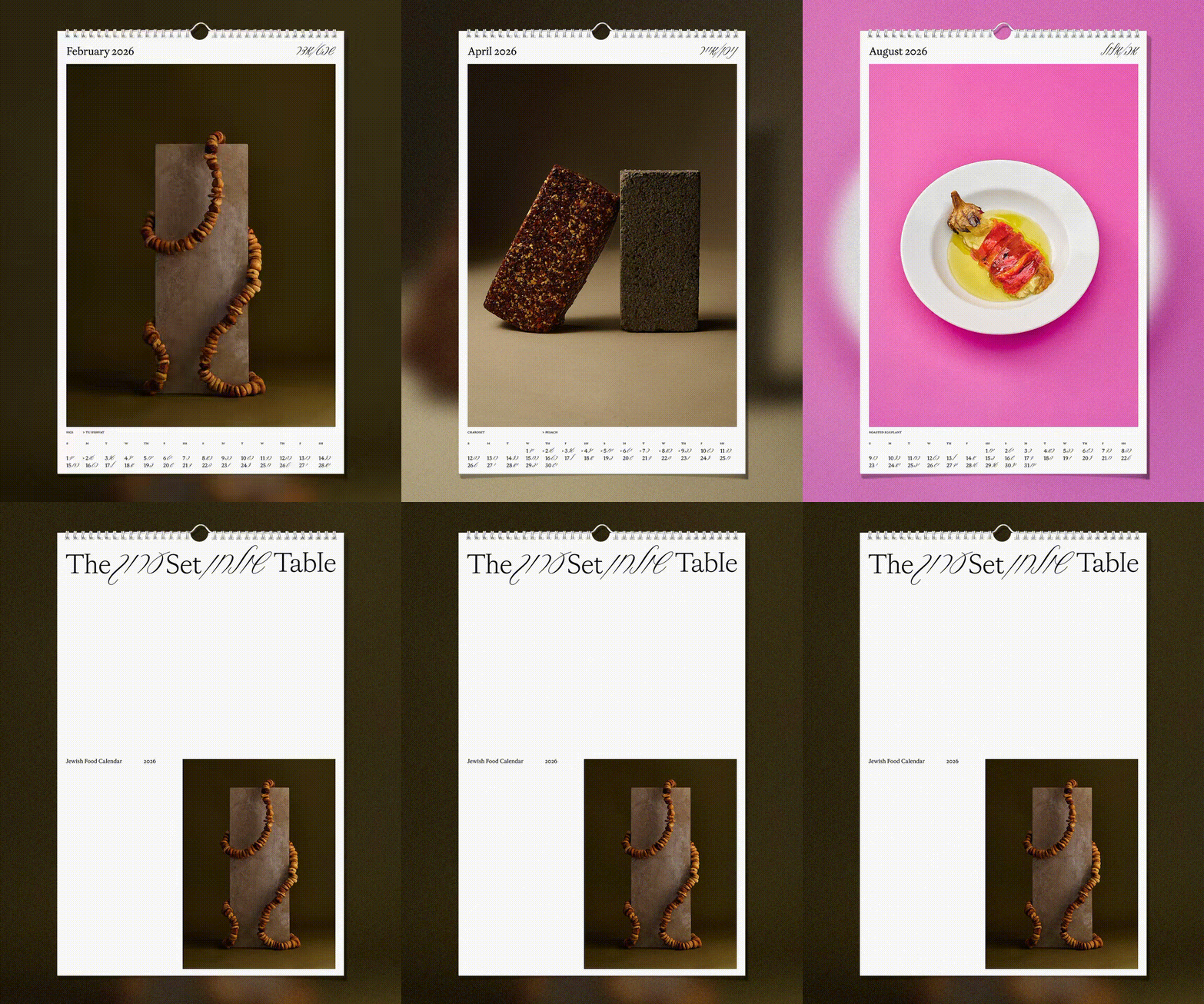
Food has always been integral to the Jewish story.
We eat to commemorate the most salient parts, and the most somber parts, of our history. Matzah to commemorate our rushed exodus from Egypt, Challah to commemorate manna from the desert, and honey for a sweet new year. Or as the saying goes, “they tried to kill us, we won, let’s eat.” We eat in the diaspora as a tangible and visceral way to remember the places we used to live in. Humble, hearty foods to recall the Eastern European towns our grandparents came from. Vibrant, spiced dishes evoke a memory of the Middle Eastern and African communities we were expelled from. And of course, many Jews abide by strict Kosher laws that separate our food from much of other cuisine. And despite, or perhaps because of, these stringencies and peculiarities, food is interwoven into the story of Jews around the world.




Jewish food is having a moment. Never before in Jewish history has such a breadth of Jewish food been known and celebrated in all corners of Jewish communities. Traditions have become more global, restaurants have become more diversified, and home cooks have access to personalities and information that previously was unavailable to them. Slowly fading are the days when bagels, lox, and the deli are the only signifiers of the Jewish culinary experience, and even those dishes are being reexamined and reinterpreted.
Time has always been an integral part of Jewish life.
In a religion of people so often forced to leave their physical surroundings, time became a refuge of ritual. The week is sanctified by the observance of Shabbat, the month is greeted with blessings over a new moon, and the year is welcomed with Rosh Hashana, in fact only one of three Jewish new years in the calendar. And our story is filled with dates and numbers—49 days between Pesach and Shavuot, 7 years in a Shmitah cycle, 50 years in the Yovel cycle. Coming together as a people to mark the passing of time is a hallmark of the Jewish experience.
So why did I decide to make a Jewish food calendar?
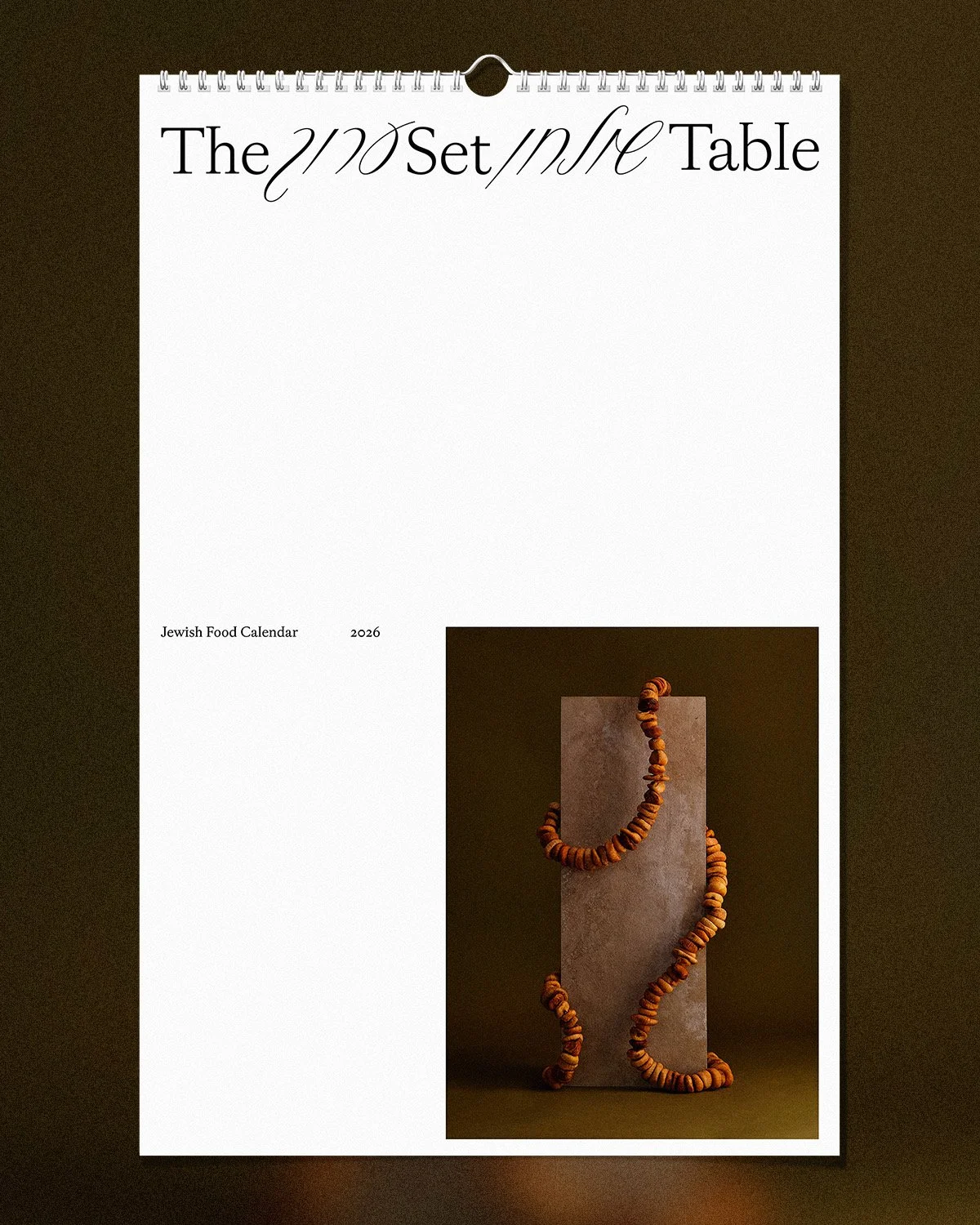
The marking of time combined with the visceral experience of sharing a meal on special occasions defines the way Jews relate to each other and to ourselves. The medium of a calendar allowed a focus on the holidays of the year and the dishes we cook to commemorate those occasions. For each month of the year, we examined what defines the holiday from a culinary perspective and used that as a springboard to search our own personal traditions as well as traditions from around the world. For some occasions, we reexamined a dish that has been made for centuries, such as cholent (January), exploring it in a new light. Other times, we looked to dishes that are lesser known, like Flódni (March), but that shed a light on something profound about the time of year. Our hope is that by using the calendar throughout the year, people can see their own traditions in a new light, discover new traditions, and feel more deeply connected to the food, rituals, and beauty that define our community.
Order The Set Table 2026 Jewish food calendar at jewishfoodcalendar.com